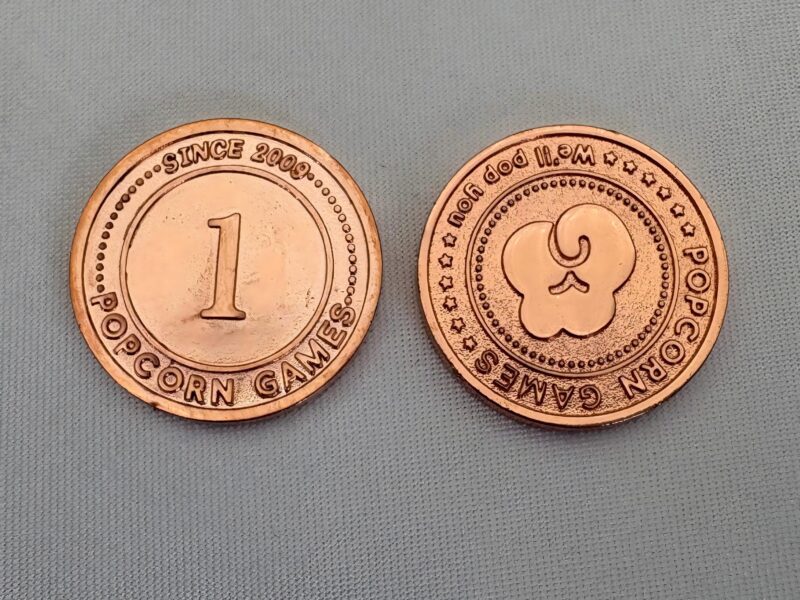
Metal coins are one of the most requested upgrades in tabletop crowdfunding. They turn paper money or cardboard chits into something backers can feel, and they photograph well on a campaign page. But for a first-time creator, custom metal coins for a Kickstarter board game raise practical questions fast: What is the MOQ? What drives the cost? And how long does production really take once the campaign funds?
This guide answers those questions from the factory side. WangFuk is an OEM / ODM metal manufacturer in Chang-an, Dongguan, producing game coins, tokens, dice, and miniatures for publishers and crowdfunding programs since 2000. We are quote-only, so you will not find a price list here — instead you will find the factors that move a quote up or down, and a realistic timeline you can plan your campaign around.
Where metal coins fit in a Kickstarter campaign
Before you ask any factory for a quote, decide what role the coins play in your campaign. It changes the quantity math more than anything else.
- Core component — every copy of the game ships with a coin set. Quantity = funded copies × coins per copy, plus spares.
- Deluxe add-on — backers opt in for a metal upgrade. Quantity is only known after the pledge manager closes.
- Stretch goal — coins unlock at a funding level. You need a quote for the unlocked scenario before you announce it, so the stretch goal does not eat your margin.
Whichever route you choose, plan to have physical samples before launch. Campaign photos, gameplay videos, and reviewer copies all look better with real coins than with renders, and a sample run also surfaces design problems while they are still cheap to fix.
MOQ for custom metal game coins
MOQ is set per design
For board-game metal programs our MOQ is flexible — first orders of about 50–100 pcs per design are often acceptable, with the final number confirmed per design, size, process, and finish. That makes small prototype or reviewer batches realistic, not just full production runs.
How denominations change the count
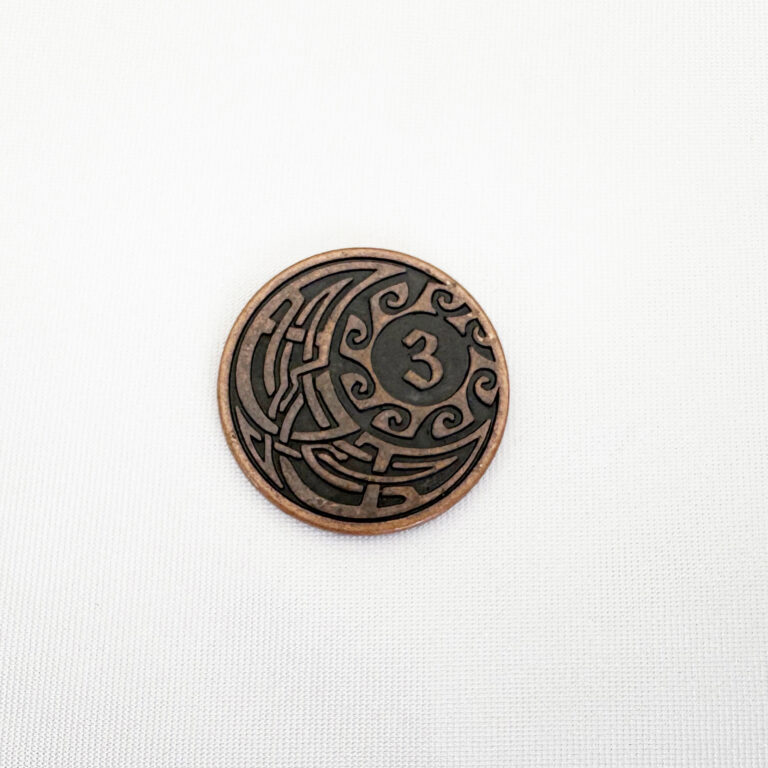
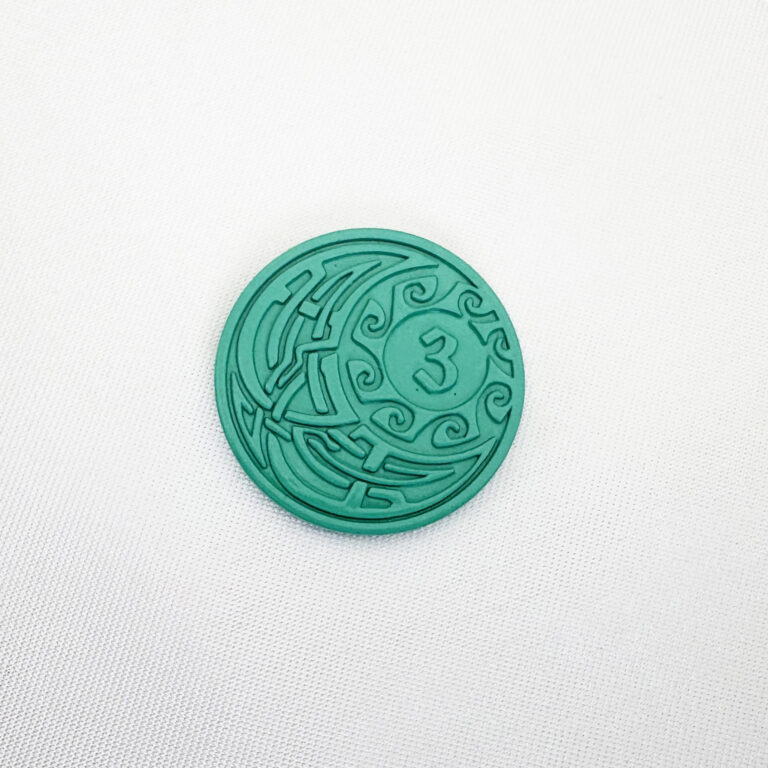
Most game economies use several values (for example 1 / 3 / 5 / 10). Each distinct face is normally its own design, so a four-value set is four designs for MOQ and tooling purposes. One way to control this is a shared outer design with interchangeable denomination centers, as on our tribal game tokens: the rim art stays the same, and only the center value changes. Colour coding each value with enamel or paint then keeps the set readable across the table.
Samples vs production quantity
Treat the pre-campaign sample and the post-campaign order as two separate steps. The sample confirms size, weight feel, plating, and colours. The production order is placed once your backer numbers are locked. Tooling made for the sample is normally the same tooling used for mass production, which is why getting the artwork right early matters.
What drives the cost of metal game coins
We price every coin program from your drawings. These are the factors that change a quote the most:
- Tooling — the number of dies or inserts (one per distinct face), single- vs double-sided designs, and 2D relief vs fully sculpted 3D surfaces.
- Size and thickness — more metal per coin means more material and longer finishing. Game-token diameters on our product pages are often around 20–35 mm; always confirm against your insert or bag.
- Material — zinc alloy is our standard for detailed coins. Brass or iron are possible when a specific weight feel is required, but process and tooling may change. See our zinc alloy vs brass vs iron comparison.
- Finish — plating colour (bright, antique, gunmetal), dual plating, the number of enamel or paint colours, and any clear coat.
- Extras — rim branding, decorative borders, reverse-side logos, or serial marks.
- Quantity tier — tooling is a one-off cost spread over the run, so unit cost falls as quantity rises.
- Packing — bulk poly bags, sorted denomination bags, trays, or Kickstarter fulfillment packs.
- Testing and shipping — any additional lab tests for your target markets, plus your Incoterm (EXW Dongguan, FOB Shenzhen, FOB Hong Kong, or door-to-door).
Tip: ask for a quote at three quantity tiers that match your campaign scenarios — for example “just funded”, “target”, and “stretch”. That lets you set add-on pricing and stretch goals with real numbers instead of guesses.
Production timeline: from artwork to shipment
These are the typical stages for our board-game metal programs, as published on our product pages:
- Artwork review — we confirm process, finish, and packing before any tooling is cut.
- Tooling — about 7–10 days after artwork approval.
- Samples — about 7–10 days after tooling.
- Mass production — about 15–20 days after sample approval for many runs. Larger or multi-SKU programs (for example 10K–100K pcs) typically need about 30–45 days.
- QC, packing, and shipment — by air, ocean, or courier after production approval.
Peak season and Chinese New Year can add time, and freight plus fulfillment-center handling come on top of factory lead time. Build a buffer into the delivery date you show backers.
A practical campaign schedule
- Before launch: finalise artwork, cut tooling, approve samples, shoot campaign media.
- During the campaign: collect backer feedback on finishes; request updated quotes if stretch goals add values or colours.
- After funding: lock quantities from the pledge manager, place the PO, approve a pre-production sample, then run mass production and QC.
- Shipping: ship coins to your game manufacturer or fulfillment hubs in time to meet the rest of the game.
Design tips that save sampling rounds
- Readability first. Values must be legible at arm’s length. Large numerals, contrast from enamel or paint, and distinct colours per denomination help more than extra ornament.
- Design for your insert. Confirm diameter and stack height against the box insert or coin bag before tooling.
- Keep fine lines printable in metal. Very thin lines and tiny text can soften after polishing and plating. Send vector artwork (AI, PDF, CDR) and flag any areas that must stay crisp.
- Match your other metal parts. If the game also has metal dice or counters and markers, use one plating language across them. Our game token finishes guide explains the options.
- Use both sides. A logo or value on the reverse costs a second face on the tool but helps branding and sorting.
Safety and compliance questions backers ask
Backers and retailers increasingly ask whether metal components are tested. We publish real STC sample lab reports — EN71-3 soluble lead, ASTM F963-23 total lead (including coin samples), and REACH nickel release — on our Lab Tests page. These are product / material sample tests, not factory audit certificates. If your markets need additional testing, list the standards in your RFQ and we can arrange it. Age grading and warning labels are decided by you as the publisher for your markets. Our in-line checks are described on the Quality Control page.
What to send for a quote
- Artwork for every face (vector preferred) or a reference photo
- Diameter, thickness, and any weight target
- Number of denominations and coins per game copy
- Plating, enamel or paint colours (Pantone if you have them)
- Quantity tiers, packing preference, destination country, and Incoterm
We reply with tooling, sample timing, and unit pricing, and we routinely work under NDA for unannounced games. To see how coins move through the workshop, read our metal coin manufacturing process or visit the factory page.
Send your drawing — request a quote
Prefer to talk first? WhatsApp +86 186 8236 9779 · Hong Kong +852 3752 2079 · Dongguan factory +86 769 8162 8979.
FAQ
What is the minimum order for custom metal game coins?
MOQ is flexible and set per design. First orders of about 50–100 pcs per design are often acceptable; the final number depends on size, process, and finish.
How long does it take to make metal coins for a Kickstarter game?
Tooling takes about 7–10 days after artwork approval, samples about 7–10 days after tooling, and mass production about 15–20 days after sample approval. Larger or multi-SKU runs typically need about 30–45 days. Shipping time is extra.
Do you publish unit prices for game coins?
No. WangFuk is quote-only. We price each program from your artwork, material, finish, quantity, packing, and destination.
Can I get samples before my campaign launches?
Yes. Samples are made from the same tooling used for mass production, so you can use them for campaign photos, videos, and reviewer copies.